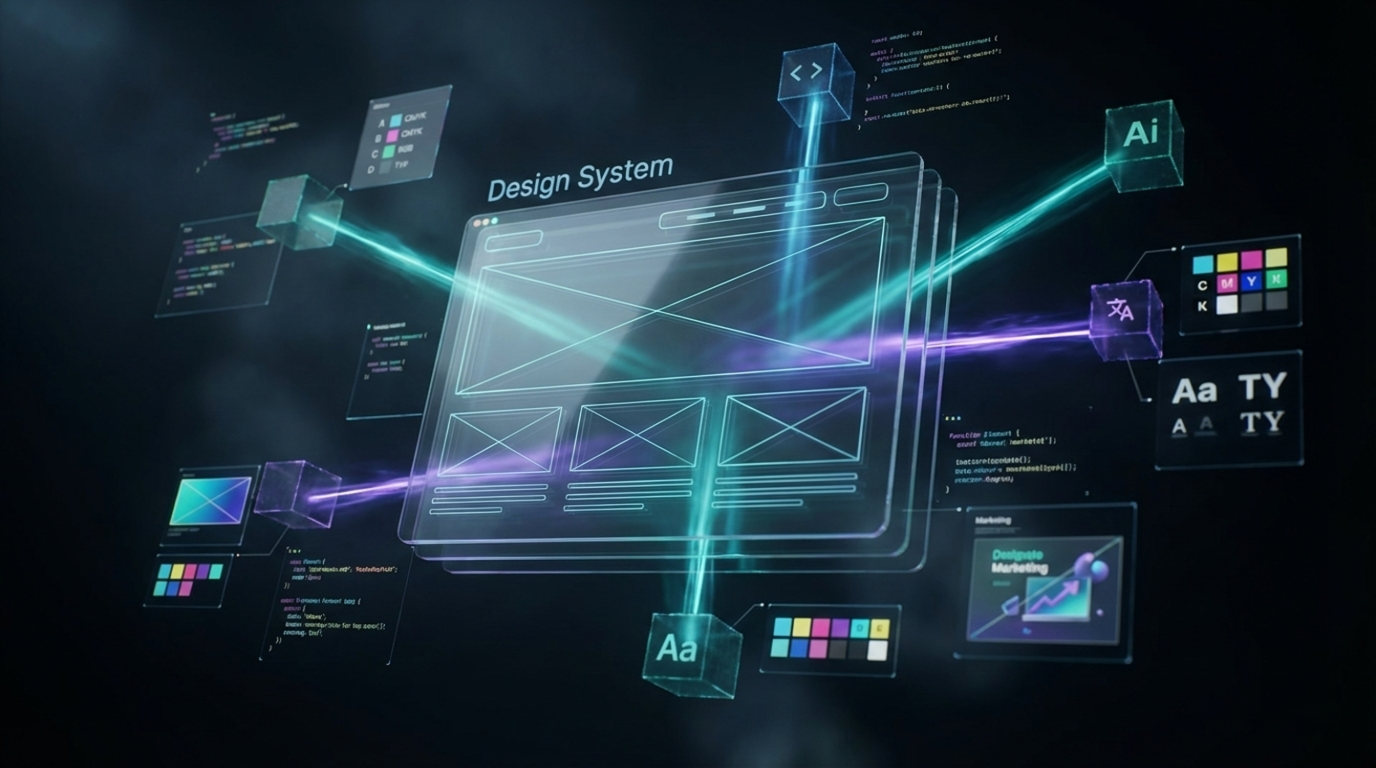
Design systems are the difference between a freelance hobby and a scalable enterprise.
Most developers and designers waste hundreds of hours manually tweaking padding, recreating brand assets, and wrestling with CSS. This inefficiency burns capital. This tutorial deconstructs a workflow leveraging Gemini 3.0, Stitch, and Cursor to automate the creation of enterprise-grade design systems, fully functional web applications, and marketing engines.
The following is a comprehensive technical manual on how to execute this “Design-First” architecture.
PART 1: Establishing the Visual Identity (Firecrawl & Gemini)
Before a single line of code is written, a unified visual language must be established. Without this, AI tools will hallucinate inconsistent styles.
1. Scrape Brand DNA with Firecrawl
To replicate an existing aesthetic or analyze a client’s brand, use Firecrawl AI.
- Navigate to firecrawl.dev.
- Enter the target URL (e.g., a coffee brand).
- Configuration: Set the format to Markdown and select Branding.
- Click Start Scraping.
This extracts the hex codes, typography hierarchy, and spacing rules in a clean markdown format.
2. Generate Brand Guidelines
Feed the scraped data into Gemini Advanced:
- Prompt: “You are a brand strategist. Output the guidelines in a clean, implementable format based on the below information.”
- Paste the Firecrawl markdown.
- Output: Gemini creates a structural document defining logo usage, color palettes (primary, secondary, accents), and typography.
Pro Tip: If starting from scratch, use a “Reverse Engineering” prompt. Upload screenshots of designs you admire (from Dribbble or Behance) and ask Gemini to extract the CSS variables and design tokens.
PART 2: UI Construction with Stitch (The Design-First Approach)
Stitch allows for component-level generation powered by Gemini 3.0. Unlike traditional coding, this method visualizes the interface before logic is applied.
1. Generate Core Sections
- Open Stitch.
- Prompt: “I’m building a website for a coffee company called Speedy Coffee. Create a beautiful, engaging, and responsive hero section.”
- Stitch generates the visual layout. Elements are configurable via a drag-and-drop interface.
2. Iterate and Assemble
- Modification: Click on specific elements to edit. For example, toggle between Mobile and Web views to ensure responsiveness.
- Dark Mode: Select the component and prompt: “Turn this into dark mode and add logos. Follow typography rules strictly.”
- Component Stitching: Generate separate sections (Testimonials, Features, CTA) individually. Stitch allows you to export these distinct visual blocks as a cohesive unit.
3. Export to Code
- Select all generated sections.
- Click Export > Open with AI Studio.
- This transfers the HTML structure and CSS styling directly into Google’s development environment.
PART 3: Logic Integration & Backend (Google AI Studio)
With the frontend architecture imported, the logic layer is applied using Gemini 1.5 Pro (or the latest available model).
1. The Assembly Prompt
In AI Studio, upload the Brand Guidelines PDF/Markdown created in Step 1.
Prompt:
*”I’d like you to design for me a website in four sections using the imported images.
- Hero section with looping animated background.
- Value proposition (Text-to-Speech software).
- Testimonials section.
- Very clear CTA: A mini form where someone enters their email and name to join the mailing list.”*
2. Connecting the CRM (GoHighLevel)
To make the form functional, connect it to a CRM using a webhook.
- In GoHighLevel: Navigate to Automations > Workflows > Create New.
- Trigger: Add Inbound Webhook. Copy the generated URL.
- In AI Studio: Provide the webhook URL to Gemini.
- Prompt: “Update the CTA form to send the ‘Name’ and ‘Email’ data to this specific webhook URL upon submission: [Insert URL]. Handle the form submission via Javascript.”
3. Verification
- Click Run. Gemini builds the app in the browser preview.
- Test the form. If successful, the GoHighLevel workflow will receive the data payload (Name, Email), creating a contact automatically.
PART 4: Production Deployment (Vercel & GitHub)
Moving from a prototype to a live production environment requires a robust DevOps pipeline.
1. Export to GitHub
- In AI Studio, click Export to GitHub.
- Create a new repository (e.g., marketing-system-b2g).
- Set visibility to Private (recommended for proprietary data).
2. Deploy via Vercel
- Go to Vercel.com > Add New Project.
- Import the GitHub repository created in the previous step.
- Click Deploy. Vercel will build the site and provide a live production URL (e.g., marketing-system.vercel.app).
3. Custom Domain Configuration
- In Vercel Settings > Domains, map your custom domain to the project to ensure brand consistency.
PART 5: Advanced Development (Cursor IDE)
To add complex features like an SEO blog or dynamic content, move the codebase to Cursor (a VS Code fork with integrated AI).
1. Local Environment Setup
- Open Cursor.
- Select Clone Repo and paste the GitHub URL.
- Open the terminal (Cmd + J) and run npm install (assuming a Node.js environment).
2. SEO Infrastructure Setup
Use Claude 3.5 Sonnet (integrated into Cursor) to build the SEO backend.
- Prompt: “I need you to set up complete SEO infrastructure. Analyze the existing homepage code. Create a robots.txt, generate a sitemap, and add structured data (JSON-LD) for the organization.”
- Result: Cursor will generate and insert the necessary files into the public directory.
3. Creating the Blog Engine
- Prompt: “Create a blog listing page and an individual article template that matches the existing design aesthetic exactly. Use the brand color palette.”
- Execution: Cursor generates blog/index.html and blog/[slug].html, styling them with the same CSS variables defined in the scraped brand guidelines.
4. Debugging
If the local server (npm run dev) throws errors or styles don’t load:
- Open the browser’s Inspect Element > Console.
- Screenshot the error.
- Paste the screenshot into Cursor’s chat.
- Prompt: “This error is appearing in the console. Fix the code to resolve the asset loading issue.”
PART 6: The Marketing Asset Engine (Higgsfield)
To scale content production, use Higgsfield AI (specifically the Nano Banana model) to create on-brand visuals and video memes.
1. Reverse Engineering Visual Styles
- Find a high-performing image (e.g., a comic strip style ad).
- In Gemini: Upload the image.
- Prompt: “Reverse engineer this image. Create a detailed prompt that would generate this exact style, lighting, and composition.”
- In Higgsfield: Paste the generated prompt into the creation tool.
- Modify: “Replace characters with a Springer Spaniel and a Robot discovering the [Your Brand] YouTube channel.”
2. Video Meme Generation
- Upload two source images (e.g., a “Before” and “After” state).
- Use Higgsfield’s Video tool.
- Set the End Frame to the second image.
- Prompt: “Morph from image A to image B with a high-energy transition.”
- This creates high-retention video loops perfect for LinkedIn or Instagram ads.
PART 7: Automated Internal Docs (Claude Code)
Finally, automate the creation of business documentation using Claude Code (CLI tool).
1. Install MCP Skills
- In the Cursor terminal: npx @anthropic-ai/claude-code.
- Install “Office Skills” (enables manipulation of DOCX, XLSX, PPTX).
2. Generate Branded Documents
- Upload the Brand Guidelines into the context.
- Prompt: “Create a Word document titled ‘Why Saturday is the Best Day for AI Automation’. Use the fonts, spacing, and logo defined in the brand guidelines.”
- Prompt: “Create an Excel spreadsheet projecting 2026 revenue. Use the brand’s specific shade of green for header rows.”
Result: The system outputs file-ready documents that strictly adhere to visual identity, eliminating manual formatting.