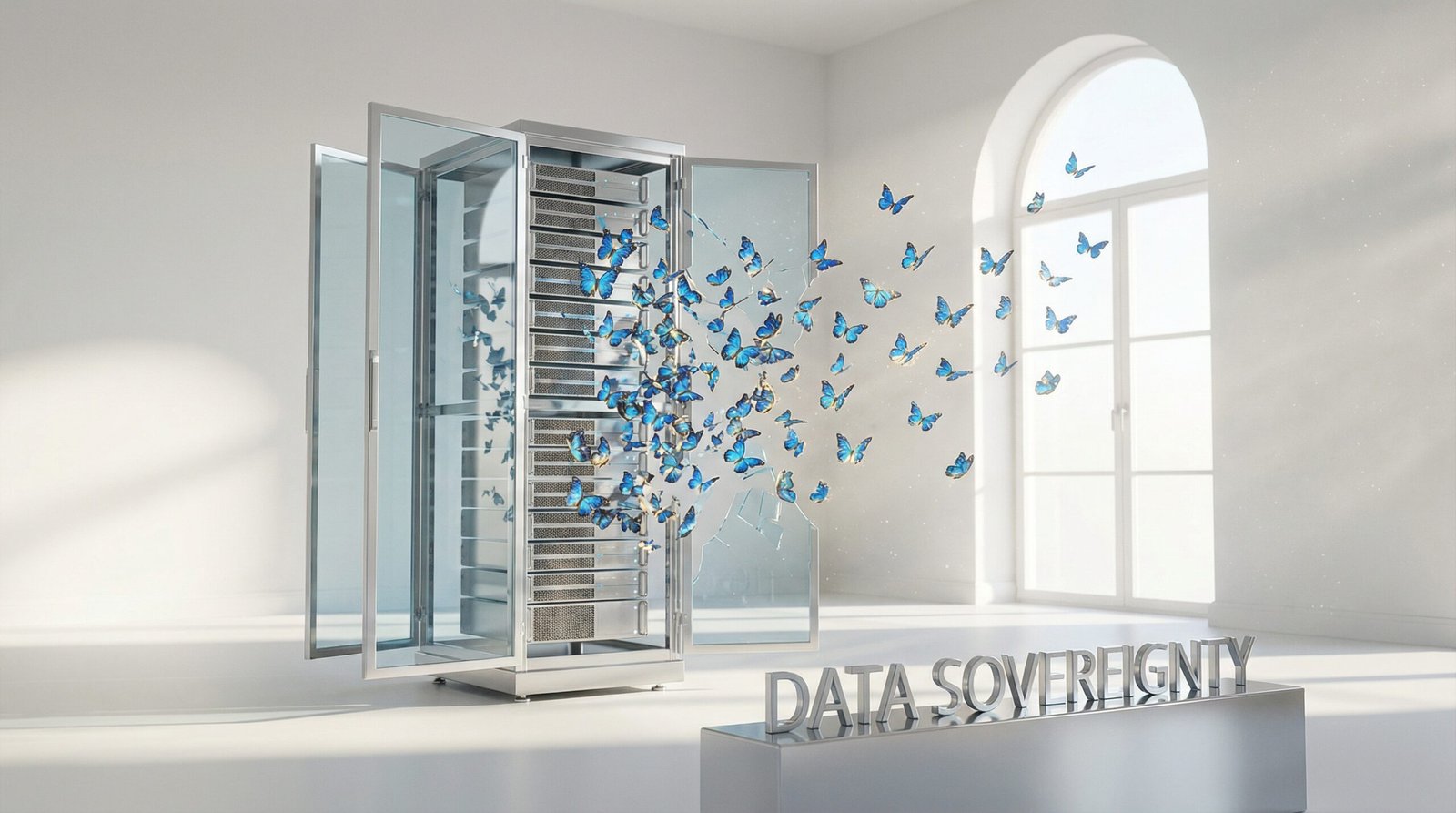
The “Post-Cloud” movement is gaining momentum. While the last decade was defined by a mass migration toward the convenience of Big Tech’s walled gardens, the tide is turning. Founders are waking up to a harsh reality: the convenience of managed services often comes at the steep price of margins and architectural control.
This analysis explores a burgeoning shift toward “Bare Metal” infrastructure and open-source sovereignty. For the strategic developer, this creates five distinct SaaS opportunities that capitalize on the growing demand for privacy, data ownership, and cost efficiency.
1. The Open-Source Affiliate Engine
Traditional affiliate marketing tools currently demand excessive access to a company’s financial core. Most managed solutions require a direct connection to Stripe, granting third-party entities read access to revenue data, customer emails, and transaction histories.
There is a clear opening for a self-hosted, open-source affiliate tool. By allowing companies to run their partner programs on their own infrastructure, the “privacy tax” is eliminated. This model fosters transparency; partners can inspect the attribution logic directly in the code, ensuring they are being compensated fairly without the “black box” skepticism inherent in centralized SaaS.
- Free Community Edition: For distribution and standard-setting.
- Pro Lifetime License: Advanced features like multi-tier support.
- Done-For-You Service: Handling tax compliance and payouts for a fee.
2. Agentic QA: Beyond Fragile Test Suites
The current state of Quality Assurance (QA) is notoriously brittle. Tools like Cypress or Playwright often break the moment a UI element shifts by a single pixel. This creates a maintenance nightmare for lean engineering teams.
The next evolution appears to be Agentic QA. Instead of writing rigid scripts, developers provide an AI agent with a high-level mission: “Go to the pricing page, select the Pro plan, and verify the checkout flow.” Using computer vision and a headless browser, the agent navigates the application like a human. This approach eliminates the maintenance burden, as the agent adapts to UI changes dynamically.
3. The “Shadow Database” for Data Liberation
Vendor lock-in remains one of the most significant risks for modern enterprises. When a company’s entire operational logic lives inside tools like Notion or Airtable, they are at the mercy of that provider’s pricing hikes or account policies.
A Shadow Database tool serves as a “data insurance” policy. It connects to various SaaS APIs and mirrors all content—in real-time—into a standard SQL database hosted on the user’s own server. If a service goes down or changes its terms, the business retains a structured, queryable backup of every record, ready to be migrated to a new platform instantly.
4. Self-Hosted AI Media Studios
Currently, AI image and video generation is dominated by credit-based models. These platforms essentially resell compute at a significant markup.
Taking inspiration from the “TypingMind” model for LLMs, there is a massive opportunity for a high-end UI sitting on top of raw API providers like Replicate or Fal.ai. By selling a lifetime license for a sophisticated media studio interface, founders can offer users “wholesale” pricing on generation. The user brings their own API key, and the founder carries zero server costs, creating a high-margin, low-overhead software play.
5. Content Sovereignty: The Self-Hostable Video Node
Platform risk is a looming threat for creators. Even established channels face sudden termination due to algorithmic errors or policy shifts. Building a business on “rented land” is increasingly seen as a liability.
A self-hostable YouTube clone allows creators to own their distribution entirely. This isn’t about replacing YouTube’s discovery engine, but about creating a “fail-safe” node where the creator owns the database of comments, the subscriber list, and the video files.
- Monetization: By integrating membership features and Stripe directly into a self-hosted node, creators keep 100% of their fan revenue, circumventing the 30-50% cuts taken by centralized social platforms.
The Verdict
The transition from managed convenience back to controlled infrastructure suggests a new cycle of SaaS development. For the solo founder, building tools that facilitate this “Data Liberation” appears to be the most viable path to a high-margin business in 2026.